
The Anatomy of a High-Trust Homepage for Service Businesses in Competitive Markets

A homepage is not just an introduction to your business. It is the primary trust-building environment that determines whether a visitor stays, explores, and eventually converts.
For service-based businesses in Oregon and across the United States, especially in competitive markets, the homepage often decides whether a lead is gained or lost within seconds.
High-performing websites are not defined by aesthetics alone. They are defined by trust architecture, a structured combination of design, messaging, and psychological signals that guide users toward confidence and action.
What Is a High-Trust Homepage?
A high-trust homepage is a strategically designed entry point that immediately communicates credibility, relevance, and authority.
It answers three subconscious questions users ask within seconds:
Can I trust this business?
Does this solve my problem?
Is this worth my time?
If a homepage fails to answer these questions quickly, users leave.
Why Trust Matters More Than Traffic
Many businesses focus on increasing website traffic but overlook the importance of trust.
Traffic without trust leads to:
High bounce rates
Low conversion rates
Poor engagement metrics
Wasted advertising spend
Trust is the foundation that converts visitors into leads.
The First 5 Seconds Decide Everything
Users form impressions almost instantly.
Within the first few seconds, they evaluate:
Visual professionalism
Message clarity
Brand credibility
Page structure
If these elements fail to establish confidence, users rarely continue exploring the site.
The Role of Above-the-Fold Trust Signals
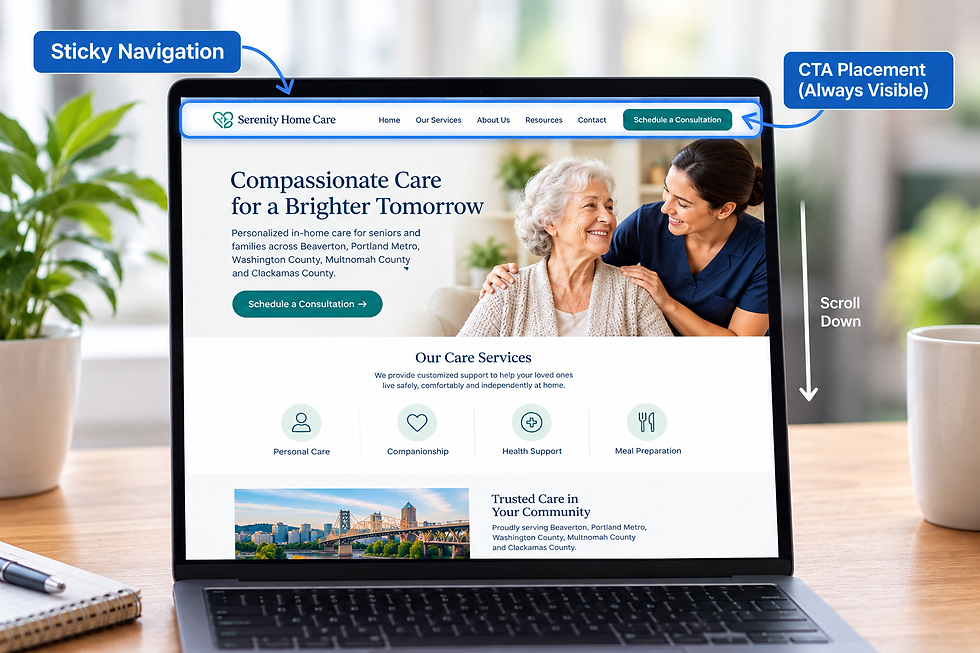
The top section of your homepage must immediately communicate authority.
Effective trust signals include:
Clear value proposition
Recognizable branding
Client logos or partnerships
Testimonials or ratings
Strong call to action
These elements reduce uncertainty and encourage deeper engagement.
Visual Hierarchy Builds Immediate Confidence
Visual hierarchy determines how users process information on your homepage.
A high-trust homepage ensures:
Headlines are dominant and clear
Supporting information flows logically
Calls to action stand out naturally
Key trust elements are easy to find
Without hierarchy, users feel lost and disengage.
Messaging Clarity Is a Trust Factor
Confusing messaging is one of the fastest ways to lose credibility.
A high-trust homepage communicates:
What you do
Who you serve
Why you are different
What results you deliver
Clarity builds confidence. Confusion creates doubt.
Social Proof Is Essential for Competitive Markets
In competitive industries, users rely heavily on social proof before making decisions.
Effective forms include:
Client testimonials
Case studies
Reviews and ratings
Industry certifications
Real-world results
These signals validate your claims and reduce perceived risk.
The Importance of Professional Design
Design quality directly influences perceived trustworthiness.
A professional homepage should include:
Clean layout structure
Consistent typography
Balanced spacing
High-quality imagery
Cohesive branding
For service businesses in Oregon and nationwide markets, design often determines first impressions before content is even read.
Speed and Performance Influence Trust
Website performance is closely tied to perceived reliability.
Slow-loading homepages can cause users to:
Question professionalism
Exit before engaging
Distrust the brand
Fast, responsive websites signal competence and reliability.
Navigation Should Reduce Friction
A high-trust homepage guides users effortlessly.
Effective navigation should:
Be simple and intuitive
Highlight key services
Avoid overwhelming choices
Support quick decision-making
If users struggle to find information, trust decreases.
Clear Calls to Action Build Direction
A homepage without clear direction creates uncertainty.
Strong calls to action should:
Be visible immediately
Use action-oriented language
Appear multiple times naturally
Align with user intent
Clarity in next steps reinforces trust and reduces hesitation.
Mobile Trust Experience Matters More Than Ever
Most users now access websites via mobile devices.
Mobile homepage optimization requires:
Simplified layouts
Readable text without zooming
Easy-to-tap buttons
Fast-loading elements
A poor mobile experience significantly reduces trust and conversions.
Consistency Builds Brand Authority
Consistency across all elements reinforces trust.
This includes:
Messaging consistency
Visual branding consistency
Tone of voice alignment
Service descriptions
Inconsistent messaging creates confusion and weakens authority.
Emotional Design Influences Decision Making
Trust is not only logical. It is emotional.
Design elements that influence emotion include:
Imagery that reflects real clients or results
Color schemes that convey professionalism
Layouts that feel structured and calm
Emotional alignment strengthens user confidence.
The Role of Content Structure in Trust Building
A high-trust homepage is structured for easy scanning.
Effective structure includes:
Clear section separation
Logical content flow
Prioritized information hierarchy
Digestible content blocks
Users should never feel overwhelmed or forced to search for key information.
Heatmaps Reveal Trust Breakdowns
Behavioral data can uncover weak trust signals.
Heatmaps show:
Where users lose attention
Which sections are ignored
Whether CTAs are effective
How far users scroll
This data helps refine homepage structure for better performance.
Local Trust Signals for Oregon and US Businesses
For service businesses targeting Oregon or broader U.S. markets, local trust signals are critical.
These include:
Geographic service clarity
Local testimonials
Regional case studies
Community involvement
Local relevance increases credibility and conversion likelihood.
Final Strategic Insight
A high-trust homepage is not just a design asset. It is a conversion system built to eliminate doubt, guide attention, and establish authority instantly.
For service-based businesses in Oregon and across the United States, trust is the most important factor influencing whether visitors become leads.
At Yber Digitals, we build high-trust, conversion-focused homepages using strategic UX design, visual hierarchy, messaging clarity, and performance optimization to maximize business growth.
Schedule a strategy consultation today to learn how a high-trust homepage can increase credibility, improve conversions, and strengthen your digital presence.
Facebook: https://www.facebook.com/yberdigitals/


Comments