
How Revenue-Focused SEO Strategies Are Reshaping Local Business Growth in Oregon
- Yber Digital

- 5 days ago
- 5 min read
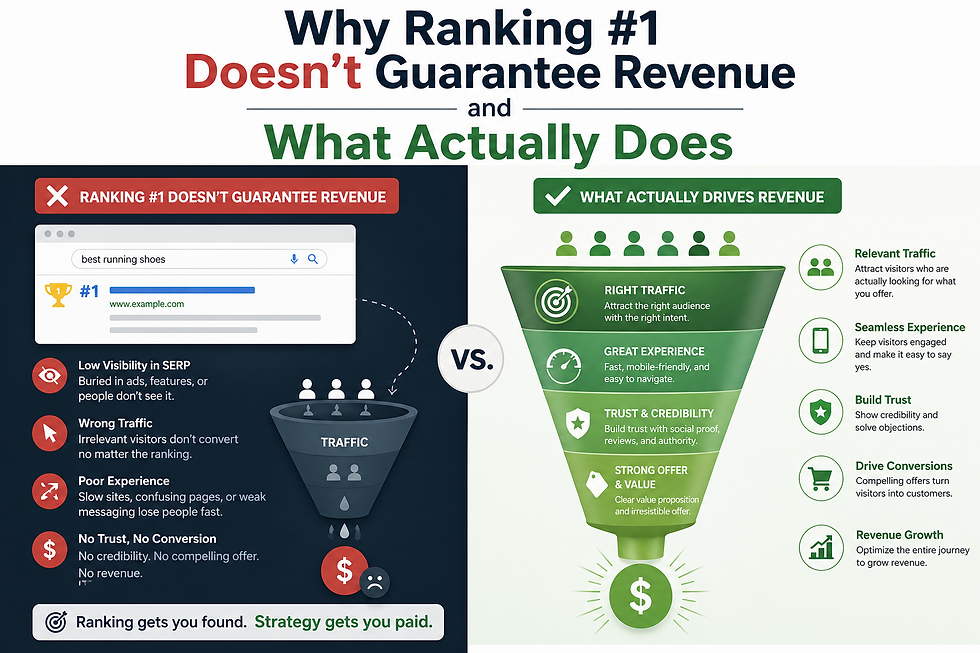
For years, businesses treated SEO as a visibility game. Rankings, traffic, and impressions became the benchmark for success. But visibility without conversion is just noise.
Today, a new approach is reshaping how businesses grow. Revenue-focused SEO is changing the conversation from traffic volume to measurable business outcomes. Across Oregon and throughout the United States, companies that shift toward this strategy are not just ranking higher. They are generating more leads, closing more deals, and building predictable growth systems.
This is not a trend. It is a strategic shift in how SEO is executed and evaluated.
The Shift From Traffic to Revenue
Traditional SEO focused heavily on increasing organic traffic. While traffic still matters, it is no longer the primary goal. The real objective is revenue generation.
A website can attract thousands of visitors each month and still fail to produce meaningful results. This often happens when SEO is disconnected from user intent, sales processes, and conversion pathways.
Revenue-focused SEO flips that model. Instead of asking how to get more visitors, it asks how to attract the right visitors and convert them into paying customers.
For local businesses in Oregon, this shift is critical. Whether operating in Portland, Salem, Eugene, or smaller regional markets, competition is increasing. Businesses that prioritize revenue over vanity metrics are gaining a clear advantage.
Understanding High-Intent Search Behavior
Not all search traffic is equal. Some users are researching, while others are ready to take action. Revenue-focused SEO identifies and targets high-intent search queries that indicate buying readiness.
For example, a search like “best roofing company in Oregon” signals strong intent. A search like “what is roofing” does not.
By focusing on keywords tied to decision-making stages, businesses can align their SEO efforts with real opportunities. This approach ensures that organic traffic is not just growing, but converting.
Across the United States, this strategy is especially effective in service-based industries where timing and urgency drive decisions.
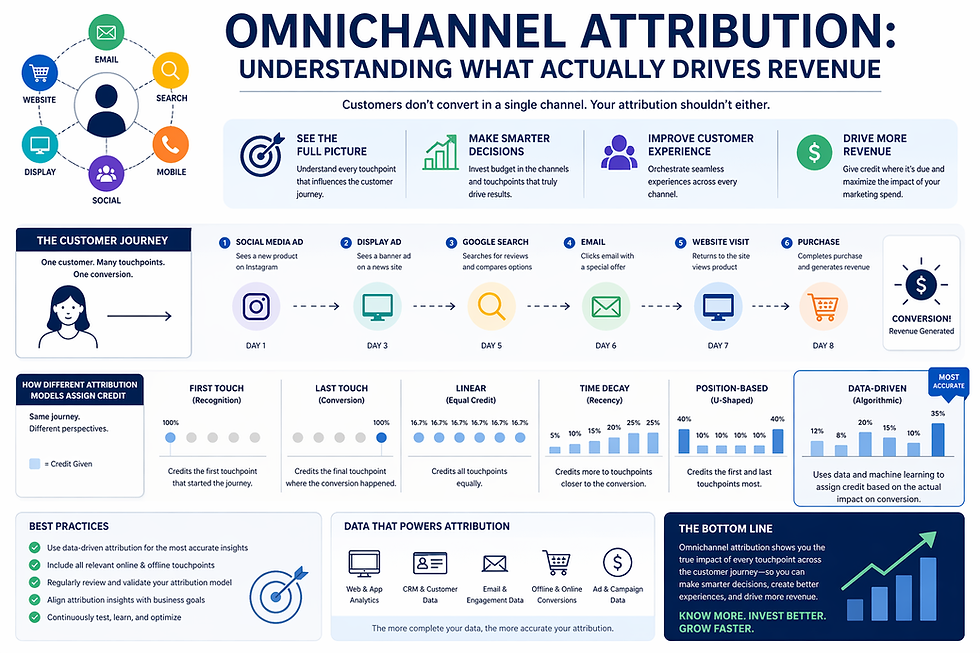
Building SEO Around the Customer Journey
Revenue-focused SEO is not limited to keywords. It is built around the entire customer journey.
This includes awareness, consideration, and decision stages. Each stage requires different types of content, messaging, and optimization.
Awareness-stage content builds visibility and authority. Consideration-stage content answers deeper questions and positions the business as the best option. Decision-stage content removes friction and drives conversions.
Businesses in Oregon that structure their SEO around this journey are seeing stronger engagement and higher lead quality.
Instead of isolated blog posts or disconnected service pages, they create a cohesive system that guides users from discovery to action.
The Role of Conversion Optimization
Traffic alone does not generate revenue. Conversion does.
Revenue-focused SEO integrates conversion optimization directly into the strategy. This includes improving website design, messaging, and user experience to increase the percentage of visitors who take action.
Key elements include clear calls to action, trust signals, streamlined navigation, and fast-loading pages.
For local businesses, even small improvements in conversion rates can significantly impact revenue. A site that converts at 2 percent versus 5 percent can more than double its lead generation without increasing traffic.
This is where many DIY SEO efforts fall short. Without a conversion strategy, increased visibility does not translate into business growth.
Leveraging Local Authority for Competitive Advantage
Local SEO has always been important, but revenue-focused strategies take it further.
It is not just about appearing in local search results. It is about dominating local authority signals.
This includes optimizing Google Business Profiles, building consistent citations, earning high-quality local backlinks, and generating authentic customer reviews.
In Oregon, where local communities are tight-knit and trust-driven, these signals play a significant role in influencing decisions.
Businesses that establish strong local authority are more likely to capture high-intent traffic and convert it into loyal customers.
This approach also scales across the United States, allowing businesses to expand into new markets while maintaining strong local relevance.
Data-Driven Decision Making
Revenue-focused SEO relies heavily on data. Not just traffic data, but performance metrics tied directly to business outcomes.
This includes lead tracking, conversion rates, cost per acquisition, and customer lifetime value.
By analyzing these metrics, businesses can identify which strategies are driving real results and which are not.
For example, a keyword that generates fewer visits but higher conversion rates may be far more valuable than one that drives large volumes of low-quality traffic.
In Oregon’s competitive markets, this level of insight allows businesses to allocate resources more effectively and maximize return on investment.
Aligning SEO With Sales and Marketing
One of the biggest advantages of revenue-focused SEO is alignment.
SEO is no longer isolated from sales and marketing efforts. It becomes an integrated part of a broader growth strategy.
This means aligning content with sales messaging, ensuring that landing pages support lead generation, and using insights from customer interactions to refine SEO campaigns.
When SEO, sales, and marketing work together, the result is a cohesive system that drives consistent growth.
Businesses across the United States that adopt this integrated approach are seeing stronger performance and faster scaling.
The Competitive Edge in Oregon and Beyond
Oregon presents a unique landscape for businesses. From urban centers to rural communities, the diversity of markets requires adaptable strategies.
Revenue-focused SEO provides that flexibility. It allows businesses to tailor their approach to specific audiences while maintaining a unified growth framework.
This is especially valuable for companies looking to expand beyond local markets. A strategy that works in Oregon can be scaled to other states with the right adjustments.
The key is focusing on fundamentals that drive revenue, not just visibility.
Why Businesses Are Moving Away From DIY SEO
Many businesses start with DIY SEO in an attempt to save costs. While this can produce some early results, it often lacks the depth and strategy needed for long-term growth.
Revenue-focused SEO requires a comprehensive approach that includes technical optimization, content strategy, conversion design, and data analysis.
Without expertise in these areas, businesses risk investing time and resources into efforts that do not produce meaningful returns.
Partnering with an experienced agency brings structure, expertise, and accountability to the process. It ensures that SEO efforts are aligned with business goals and continuously optimized for performance.
The Future of SEO Is Revenue-Driven
Search engines are evolving. User behavior is changing. Competition is increasing.
In this environment, businesses cannot afford to focus on outdated metrics.
Revenue-focused SEO represents the future. It prioritizes outcomes that matter, aligns with business objectives, and creates sustainable growth systems.
For local businesses in Oregon and across the United States, adopting this approach is no longer optional. It is essential for staying competitive and achieving long-term success.
The question is not whether SEO works. It is whether your SEO is working for your revenue.
If you are ready to move beyond rankings and build a strategy that drives real business results, now is the time to take action.
Schedule a strategy consultation with Yber Digitals and discover how a revenue-focused SEO approach can transform your growth trajectory.
Facebook: https://www.facebook.com/yberdigitals/

Comments