
Behavioral UX Design: How Micro-Interactions Influence Lead Generation

Most websites fail quietly.
They look polished. They load fast. They check all the technical boxes.
But they do not convert.
The issue is not always the offer or the traffic. It is how users experience the site.
More specifically, how they feel while interacting with it.
Behavioral UX design focuses on that moment-by-moment experience. It studies how users think, react, and decide. Then it uses that insight to influence behavior.
At the center of this strategy are micro-interactions.
Small details. Subtle responses. Minor animations.
But together, they shape whether a user engages or leaves.
For service-based businesses in Oregon and across the United States, these details often determine whether a visitor becomes a lead.
What Is Behavioral UX Design
Behavioral UX design is the practice of designing digital experiences based on how users actually behave, not how we assume they behave.
It combines psychology, user experience, and conversion strategy.
Instead of focusing only on layout and visuals, it focuses on decision-making triggers.
Why users click. Why they hesitate. Why they abandon.
Every interaction is intentional.
Core principles of behavioral UX design include:
Reducing cognitive load to make decisions easier
Guiding attention toward key actions
Reinforcing user confidence through feedback
This approach transforms websites from passive experiences into guided journeys.
What Are Micro-Interactions
Micro-interactions are small, functional design elements that respond to user actions.
They provide feedback, create engagement, and guide behavior.
They are often overlooked because they are subtle. But they have a significant impact on user perception.
Common examples of micro-interactions include:
Button hover effects that signal clickability
Form validation messages that provide instant feedback
Animations that confirm an action has been completed
These elements may seem minor, but they reduce uncertainty and improve usability.
For businesses across the U.S., where user expectations are high, these details can differentiate your website instantly.
Why Micro-Interactions Influence Conversions
Every user action is a decision.
Click or not click. Scroll or leave. Submit or abandon.
Micro-interactions influence these decisions by shaping how users feel during the process.
They improve conversions by:
Providing clarity on what will happen next
Reducing hesitation through immediate feedback
Creating a sense of control and confidence
For example, a button that changes color on hover signals that it is interactive.
A form that highlights errors instantly prevents frustration.
These small cues build momentum toward conversion.
Reducing Friction Through Feedback
Friction is the enemy of conversion.
When users are unsure, confused, or frustrated, they leave.
Micro-interactions reduce friction by providing continuous feedback.
Effective feedback mechanisms include:
Real-time form validation to guide input
Progress indicators that show how close users are to completion
Confirmation messages that reassure users after actions
For service businesses in Oregon and across the United States, this creates a smoother, more intuitive experience.
The easier it feels, the more likely users are to complete the process.
Guiding Attention With Subtle Cues
Users do not read websites line by line. They scan.
Micro-interactions help guide their attention to the most important elements.
Attention-guiding techniques include:
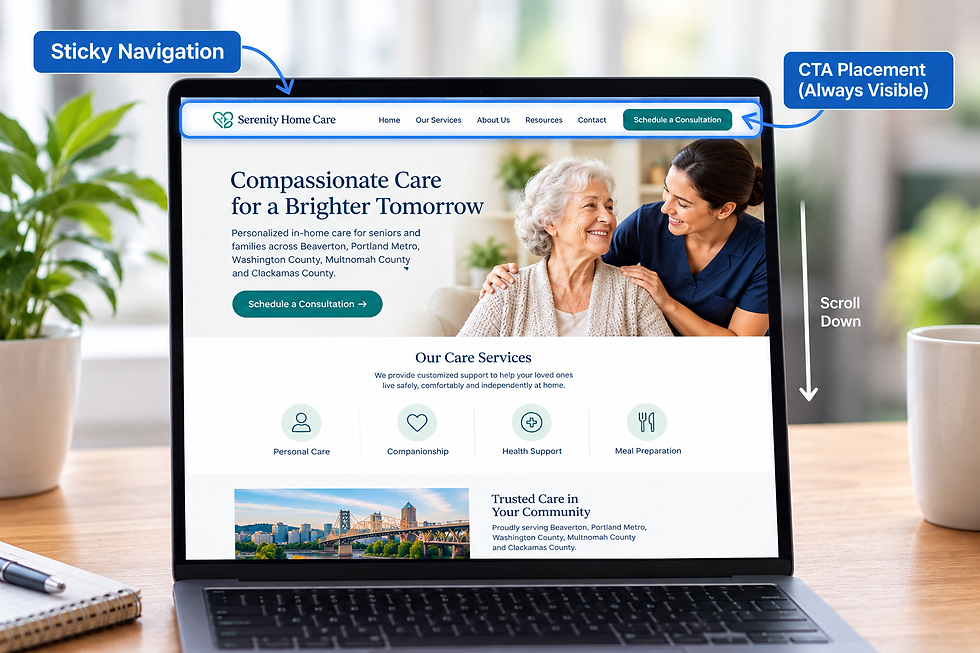
Subtle animations that draw focus to calls to action
Hover effects that highlight key links or buttons
Visual changes that indicate priority actions
These cues act like signposts.
They tell users where to look and what to do next without overwhelming them.
This is especially important for service-based websites where the goal is to drive specific actions.
Building Trust Through Interaction
Trust is not built only through testimonials and credentials.
It is also built through experience.
A website that feels responsive, intuitive, and polished creates a sense of professionalism.
Micro-interactions contribute to trust by:
Demonstrating attention to detail
Creating a smooth and predictable user experience
Reinforcing that the business is reliable and competent
For businesses operating across the U.S., this can be a deciding factor.
Users often associate the quality of your website with the quality of your service.
Encouraging Engagement Without Overloading
There is a fine line between engaging and distracting.
Too many animations or effects can overwhelm users and reduce clarity.
Behavioral UX design focuses on balance.
Best practices include:
Using micro-interactions only where they add value
Keeping animations subtle and purposeful
Ensuring that interactions enhance usability, not distract from it
The goal is to support the user journey, not complicate it.
Aligning Micro-Interactions With Conversion Goals
Every micro-interaction should serve a purpose.
It should support a specific action or reduce a specific barrier.
Strategic alignment includes:
Enhancing calls to action to make them more noticeable and inviting
Improving form interactions to increase completion rates
Guiding users through multi-step processes smoothly
For example, a booking form that visually progresses as users complete each step can increase completion rates significantly.
These small improvements compound over time.
Measuring the Impact of Behavioral UX
Behavioral UX design is not just theoretical. Its impact can be measured.
Key metrics to track include:
Conversion rates on key pages
Form completion rates
User engagement and interaction patterns
Changes in these metrics often reflect the effectiveness of your micro-interactions.
For businesses in Oregon and across the United States, this provides clear insight into what is working and what needs improvement.
Common Mistakes in UX and Micro-Interactions
Even well-designed websites can fall short if micro-interactions are not implemented correctly.
Common mistakes include:
Overusing animations that distract from key actions
Lack of feedback for important user actions
Inconsistent interaction patterns across the site
Ignoring mobile user experience
These issues create confusion and reduce trust.
Fixing them often leads to immediate improvements in engagement and conversions.
Why Behavioral UX Design Is a Competitive Advantage
In today’s digital landscape, users expect more than functionality.
They expect experience.
Behavioral UX design provides a framework for delivering that experience in a way that drives results.
It turns small details into strategic advantages.
For service-based businesses in Oregon and across the United States, this is how you stand out in competitive markets.
If your website is not converting, the problem may not be your offer.
It may be how users experience your site.
Schedule a strategy consultation with Yber Digitals and build a behavioral UX system designed to increase engagement and drive more leads.
Facebook: https://www.facebook.com/yberdigitals


Comments